
· by Michael Blair, Nashville's Drainage and Excavation
Piping downspouts underground and out into the yard keeps a great deal of water away from a Nashville foundation. University of Maryland Extension’s brief on redirecting downspouts points out that impervious surfaces such as roofs increase runoff by keeping rain from soaking into the ground. The gutters gather all of it and let it out at a handful of downspouts. A buried line is out of sight, though, and it fails quietly: leaves wash down from the gutters in the fall, roots can work into a loose joint, and a shallow pipe under the lawn can be flattened. When the line stops, the water backs up at the downspout and pours out right where it was meant to be kept away from. Finding and fixing that kind of failure is part of our downspout and gutter drainage service.
How can you tell a buried downspout line is blocked?
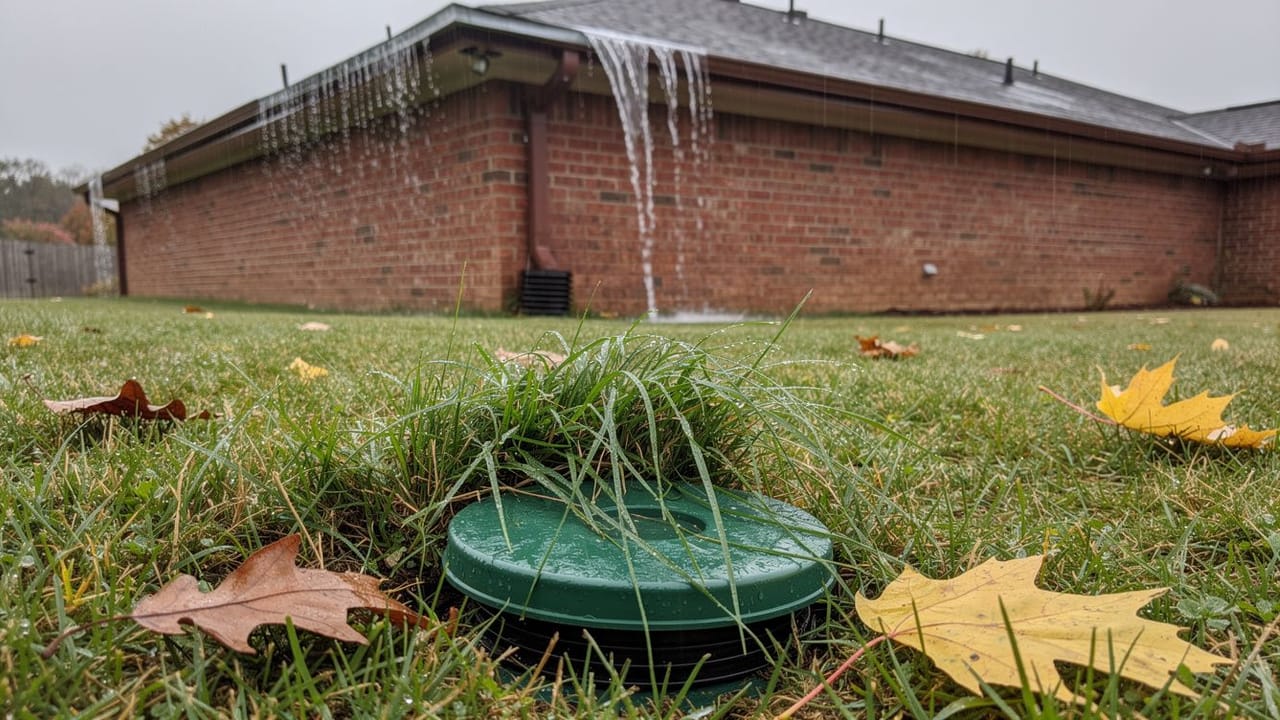
Water spilling out of the gutter at the corner where the downspout drops, even though the gutter itself is clean, is the sign to take seriously. The downspout is full to the top because the pipe below can’t take the water. Water bubbling up around the joint where the downspout enters the ground and a wet patch near the foundation that was dry in past years point the same way. So does a pop-up emitter that stays shut in a heavy rain, but check its height first: NDS’s installation instructions for its low-capacity downspout system say the emitter has to sit lower than the point where stormwater enters the system, or the system will not drain.
A soggy strip across the lawn along the route of the pipe tells a different story. It can mean the water is leaving the line partway along, at a break or a joint that has pulled apart, and that is where we dig first. If the wet ground has nothing to do with the pipe’s route, our post on a soggy spot in the yard that never dries goes through the other likely causes.
How do you test a buried downspout line?
Our first step is to disconnect the downspout at the ground, or cut into the adapter if there is no clean way in, and run a garden hose into the pipe at full flow. We give it a few minutes and watch the outlet. If water arrives there steadily, the line is open and the problem is higher up, in the gutter or the downspout. If nothing arrives, or the water backs up at the top, the line is blocked or broken somewhere between.
While the hose runs, we walk the route. A spot where the ground goes soft or water rises to the surface marks the break. On a longer run we push a drain camera in from the top end to see where the blockage is and what it’s made of, which beats digging up the whole line to find out.
What clogs a buried downspout line?
Leaves and gutter grit are the first thing we look for, especially where nothing screens the top of the downspout. Many of the lines we open up were laid in black corrugated pipe, so we check those runs closely for packed debris and flattened sections. Roots are a known hazard for any buried pipe: UT Extension’s guide to choosing sewer-safer trees explains that roots go after sewer lines for the water, nutrients and oxygen inside them and grow into cracks. A roof drain isn’t a sewer, but a joint that leaks water into the soil is the place we check when roots turn up, and NDS’s instructions call for a bead of waterproof silicone or glue on both parts wherever a watertight connection is needed.
Fall matters as much as cleanliness. NDS’s high-capacity instructions say trenches should slope a minimum of 1% away from the house, which is about an eighth of an inch per foot. A line laid flatter than that, or one with a low spot, holds water there instead of emptying. At the far end, NDS tells owners to raise the mower blades or steer around a pop-up emitter so it isn’t damaged, and a lid that grass has grown over or dirt has packed into may not lift at all.
- Leaves and roof grit with no screen at the top
- A flattened run of corrugated pipe
- Roots at a joint that was never sealed
- A low spot where the line holds water
- An emitter mowed over, grown over or set too high
Fixing it and keeping it clear
When the blockage is debris near the top, we try a hose flush or a drain snake before anything gets dug. A flattened section or a sag can’t be flushed out, so that stretch is dug up and relaid. Where the whole run is corrugated pipe, we price replacing it with smooth-wall pipe at a steady fall with sealed joints, rather than patching one section after another. NDS’s high-capacity instructions describe the catch basin under the downspout as a place to clean out debris that gets into the system, and we put a basin or a cleanout fitting at the top of every line we rebuild so the next flush starts there.
For upkeep, a screen or debris filter at the top of each downspout that feeds a buried line keeps most of the leaves out; look at it once the trees are bare. Clear the grass back from each emitter in the fall so the lid can open. A blocked line on your lot is yours to deal with, since Metro Water Services says property owners are responsible for managing and maintaining stormwater issues affecting their private property.
Before any of it is dug, the utilities get marked. Tennessee 811’s FAQ says state law requires at least three working days’ notice before any excavation, and that the rule covers homeowners as well as professional excavators. It also warns that privately owned lines, such as the water service between the meter and the house, may be in the dig area without being marked. Our post on what to do before any excavation starts covers that step in more detail, and if your line has quit, ask us for a free estimate.
Sources
- NDS (Advanced Drainage Systems), Downspout Runoff Installation Instructions (Low Capacity) — Pop-up emitter must sit lower than where stormwater enters or the system will not drain; silicone or glue for watertight joints; raise mower blades or avoid the emitter
- NDS (Advanced Drainage Systems), Downspout Runoff Instructions (High Capacity) — Trenches slope a minimum of 1% away from the house; catch basin under the downspout used to clean out debris
- University of Maryland Extension, EBR-336 Slow It Down and Soak It In (2015) — Impervious surfaces such as roofs increase runoff by keeping rain from being absorbed
- UT Extension, SP628 Choosing Sewer-Safer Trees (2005, MTAS copy) — Roots invade sewer lines for water, nutrients and oxygen and grow into cracks (sewer lines, not roof drains)
- Metro Water Services, Stormwater Maintenance — Property owners are responsible for stormwater issues affecting their private property
- Tennessee 811, Frequently Asked Questions — At least three working days’ notice before excavation; applies to homeowners; privately owned lines may not be marked
FAQ
When a Buried Downspout Line Stops Draining — questions
How do I know if my underground downspout is clogged?
Water spilling from the gutter at the downspout corner, water backing up where the downspout enters the ground, or an emitter that never opens in heavy rain are the common signs. Running a hose into the line at full flow and watching whether it reaches the outlet is how we confirm it.
Can a clogged underground downspout be cleared without digging?
Sometimes. If the blockage is leaves and grit near the top, a hose flush or a drain snake from the top end is worth trying before anyone digs. A flattened pipe, a low spot that holds water or roots in a joint generally mean that section has to be dug up and relaid.
Why does my pop-up emitter not open?
First check that it sits lower than the point where the downspout water enters the line, because NDS’s installation instructions say the system will not drain otherwise. Then look for grass grown over the lid, packed dirt or mower damage, and if the lid is clear, test the line with a hose in case a blockage upstream is keeping the water from reaching it.
How do I keep downspouts from clogging?
Screen the top. A screen or debris filter on each downspout that feeds a buried line keeps most leaves out, and it deserves a look once the trees are bare. When we rebuild a line, it goes in smooth-wall pipe at a steady fall, with a catch basin or cleanout at the top so a flush can start there.